Atlas turns neglectedAI risks into staffedinterventions.
“Field strategy” is what we call our method for finding high-impact risks that fall between institutions, designing a credible path forward, and making it as easy as possible for the best-suited person or institution to take ownership of the problem.
-
01 Exploration
Identify the societal risks we want to mitigate.
-
02 Exploration
Map multiple potential defensive equilibria
Identify the stable end states in which the risk is structurally defused, then select interventions (well-scoped projects, prizes, new companies, etc.) that make one of those end states more likely (if not inevitable).
-
03 De-risking
Validate each through experts and stakeholders
- Get relevant experts who can confirm that the proposed intervention is feasible.
- Get conditional commitments from relevant stakeholders (users, customers, adopters) that, if this intervention existed, they would use/buy/choose it.
- Prove it can actually be built by running the key experiments or prototypes that retire the biggest unknowns before anyone commits.
If anyone at any point proposes an alternative intervention that seems more viable, switch to that one.
-
04 Handoff
Find the best person to lead the effort
Find the best people to execute on the intervention. Make it as easy as possible for them to say “Yes” by sharing milestones, advisors, and introductions.
-
05 Independent
Reach the defense before the risk.
This process surfaces the fastest, viable paths to turn a good possible outcome into a likely one.
Deeper: the mechanics
[For the motivated reader]
The Tiling Tree Method
- The Tiling Tree method is a way to systematically identify and structure potential solutions to a problem.
- While the process intends to be as exhaustive as reasonable, being truly exhaustive is neither practical nor necessary – the goal is simply to identify one viable intervention that can unlock a single defensive equilibrium per risk.
Can’t AI do this?
- Turns out, there’s lots of information about how the world works that isn’t recorded anywhere. If you’re unusually good at learning this information, consider applying to be a Field Strategist.
- That said, forecasting, structuring information, and identifying relevant experts is something AI models are really good at. We’ve built — and are improving — internal tools to automate as much of field strategy as possible.
Does this even work?
The team, while at Atlas Computing, helped initiate three organizations this way in the last two years. Atlas’s current chapter is an attempt to scale this process with more people working in parallel.
Read more:
Where it worksand where itdoesn’t
Works because:
- Maximizing risk-adjusted impact: Interventions are, by construction, the best proposal identified during the process. If someone had suggested a better idea, we’d have validated that as well and would be proposing that instead.
- By separating strategy and execution, you enable specialization of labor, unlocking a larger talent pool than simply looking for generalist founders or grantmakers.
- Avoids the Law of the Instrument: because we find the expert to lead execution last, we don’t limit our early investigations to the solutions we know how to lead, but rather are only limited by what we can surface in any conversation.
- Network Effects: Field strategy is mostly limited by the professional network and interview time with experts and the adoption quorum. Better coordination between Field Strategists means that any external meeting can validate more interventions.
Doesn’t work when:
- You can’t describe what good looks like (rules out particularly thorny problems and deep-uncertainty areas like AI alignment)
- Sometimes you still need a unicorn founder; a validated process doesn’t guarantee a solution exists or that you can find the right person to lead it.

While working at Atlas Computing (our predecessor), the team helped the Survival and Flourishing Fund source teams and structure their early efforts to develop technology to verify AI workloads. We noticed many teams were assuming that hardware could be trusted, in spite of expert consensus that physical access to the hardware compromised these trust assumptions. Existing approaches like clearing memory were insufficient because the compute capability persisted. Some individuals proposed using a tamper response mechanism to make physical access prohibitively costly.
Atlas Computing sourced and supported Mehmet Sencan 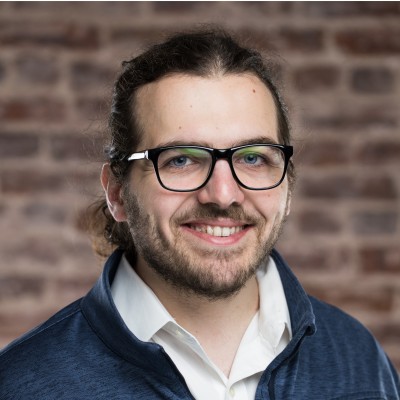 Mehmet Sencan CEO, EARENDIL LinkedIn to explore and prototype tamper response mechanisms, which evolved into Earendil’s SquibSink, a heatsink-based security measure to prevent physical manipulation of chips.
Most institutions are built around the approach.Atlas is built around the outcome.
| Role | Approach | Outcome |
|---|---|---|
| Investor | fund an ambitious founder + idea | a product with market demand |
| Researcher | pursue an open question | published results |
| Policymaker | act on a mandate | a new law or policy |
| Think tank | analyze a problem for society | proposed solutions |
| Standards body | convene an industry | consensus around a standard |
| Technical recruiter | fill a defined role | a qualified hire |
   Atlas | whatever maximizes impact — a new org, company, coalition, policy, or contract | the outcome society needs |
Atlas isn’t a think tank, a technical recruiter, or an investor. Each of those is optimized for a niche, with deep expertise built around a proven methodology; Atlas starts with the problem, then chooses the approach that best fits.
What comesout of it
An individual who is appropriately resourced to spearhead the intervention, which can take the form of a new organization, an FRO, a coalition, a policy effort, a contract, a prize, or a team inside an existing institution — chosen once the outcome is clear.
See theprojects
See the live pipeline of neglected AI risks Atlas is turning into staffed interventions. Each one is a foreseeable problem with no clear owner, from early explorations to work already in motion.
Send usa risk
Tell us about a society-scale AI risk where the owner is missing. What’s the clearly desirable outcome that needs Atlas to find a path forward?
Join thebench
Apply to join Atlas full-time as a Field Strategist or support an existing effort. Atlas needs people who can scope problems, pressure-test plans, and convene the stakeholders who make a fix real.